A life in eleven chapters
Kalpana Datta
Revolutionary. Writer. Witness to history.
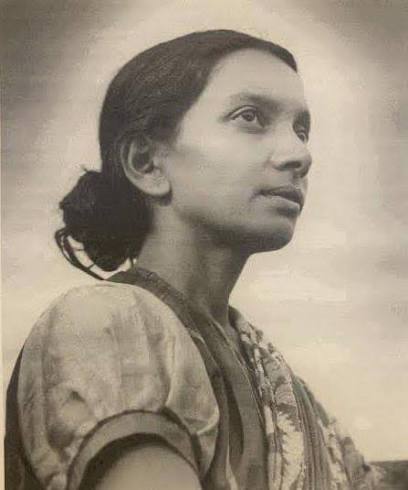
She was a science student in Calcutta when she walked into the most dangerous political circle in Bengal. She was nineteen when she first stood in a police cell, twenty when a colonial court sentenced her to transportation for life, and twenty-six when the gates opened again. What she did with the fifty-six years that followed is the half of the story most often forgotten.
Section 02 — The world she was born into
No one becomes a revolutionary
in an empty room.
Kalpana Datta was born in July 1913 into a Bengal that had already spent a decade learning how to refuse. Her childhood ran alongside a colonial state that governed roughly a fifth of humanity, and alongside a Bengali public life in which schools, printing presses, student unions and reading circles had become political instruments in their own right.
Two currents ran through that world at once. One was the mass, open, increasingly disciplined nationalism of the Indian National Congress. The other was a smaller, clandestine tradition of armed revolutionary organisation that had taken deep root in Bengal after 1905. Both drew on the same grievance. They disagreed sharply about method, and young people moved between them more freely than later accounts often suggest.
What changed most in her lifetime, and what the rest of this archive keeps returning to, is who was allowed to be political at all. When she was born, a Bengali woman with a college degree was unusual. By the time she was twenty, women were standing in the dock of colonial courts on charges of waging war against the King.
-
1905
The partition of Bengal
The colonial administration divided the province, and the swadeshi movement that answered it made boycott, indigenous manufacture and student organisation into everyday political practice. Bengal's underground revolutionary societies date their real growth from here.
-
1919
Jallianwala Bagh
Troops fired on an enclosed gathering in Amritsar. For a generation then entering school, the massacre and the Rowlatt legislation that preceded it settled a question about how colonial authority ultimately rested on force.
-
1930
Civil disobedience — and Chittagong
As the salt march opened a mass campaign across India, a group in Chittagong attempted something entirely different on the night of 18 April. Kalpana Datta was then seventeen and had not yet joined them.
Dates in this section refer to widely documented events in the history of colonial India and are given as background, not as claims about Kalpana Datta's personal involvement.
Section 03 — Chapter two of the story
18 April 1930
The night a district tried to remove itself from an empire
Shortly after ten o'clock on the night of 18 April 1930, groups of revolutionaries calling themselves the Indian Republican Army, Chittagong Branch moved on the police armoury and the Auxiliary Force armoury in Chittagong, cut telegraph and telephone lines, and disrupted the railway. The plan was not a single dramatic gesture. It was an attempt to sever a district from the machinery that governed it and hold it, however briefly, as free territory.
The operation was led by Surya Sen, a schoolteacher his students called Masterda. Around sixty-five people took part. The armouries were taken; the ammunition the group needed was not found. Four days later, on 22 April, a large body of British troops surrounded the revolutionaries in the Jalalabad hills. The engagement that followed killed twelve revolutionaries and, by the account most often cited, over eighty soldiers.
Kalpana Datta was seventeen that April and studying in Calcutta. She was not among the sixty-five. She joined Surya Sen's group in May 1931, roughly a year later, and her name entered the record of the Chittagong case through what she did afterwards — carrying explosives, preparing gun-cotton, living underground, and finally standing trial in a supplementary hearing of the armoury raid case.
Casualty figures for the Jalalabad hills engagement vary between accounts. The figures given here follow the most widely reproduced record. This site describes the events of 1930 as documented history; it does not depict them.
Section 04 — Not an exception
Three women, three courtrooms,
one decade.
Kalpana Datta is often introduced as a rare woman in a movement of men. The decade she belonged to says otherwise. Between 1930 and 1933 a recognisable network of women students in Bengal moved from debating societies into armed political organisation, and each of them arrived by her own route. They are set beside each other here because their histories genuinely intersect — not to make any of them a supporting character in someone else's story.
-
1911 — 1932
Pritilata Waddedar
Schoolteacher. Led the Pahartali operation.
A philosophy graduate of Bethune College and headmistress of a school in Chittagong. On the night of 24 September 1932 she led the armed attack on the Pahartali European Club, and took potassium cyanide after being wounded rather than be captured. She was twenty-one. Her degree was formally conferred only in 2012, eighty years later.
-
1913 — 1995
Kalpana Datta
Science student. Courier, chemist, fugitive, memoirist.
A classmate of Pritilata Waddedar at Bethune College. She joined Surya Sen's group in May 1931, carried explosives from Calcutta, prepared gun-cotton, and was assigned with Pritilata to the Pahartali operation before her arrest a week beforehand changed who led it. Sentenced to transportation for life in 1933; released in 1939.
Her full biography -
1911 — 1986
Bina Das
Fired at a Governor inside a convocation hall.
A member of the same Chhatri Sangha network in Calcutta. On 6 February 1932, at the University of Calcutta convocation, she fired five shots at Stanley Jackson, the Governor of Bengal. None hit him. She was sentenced to nine years' rigorous imprisonment and released in April 1939 — the same year as Kalpana Datta.
The question was never whether women could do this work. It was what it cost them to be permitted to. An observation drawn from the documented record, not a historical quotation
The Chhatri Sangha — a women students' association in Calcutta described in reference sources as semi-revolutionary — is the thread that connects all three. It was not a front for a single organisation. It was a place where young women who could not join men's political societies on equal terms built their own, and where recruitment into the underground quietly happened.
What this cost is worth stating plainly. It meant leaving home, being disowned, giving up a degree, and accepting that the state would treat you as a combatant while society continued to treat you as a daughter who had gone wrong.
How she got there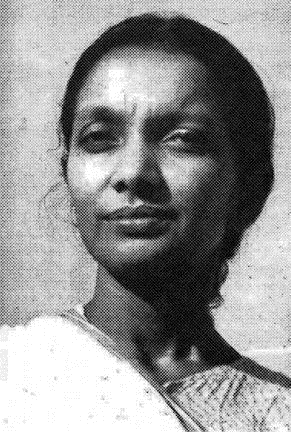
Section 05 — The second half
The prison gate is where most accounts stop. Hers ran on for fifty-six years.
She came out in 1939. In 1940 she completed the degree that her arrest had interrupted, graduating from the University of Calcutta. She joined the Communist Party of India, organised among peasants and women in Chittagong, and married P. C. Joshi, then the party's general secretary, in 1943.
Nineteen forty-three is also the year of the Bengal famine, in which estimates of the death toll commonly range between two and three million people. She worked in relief. She worked again through the violence and displacement of Partition. In 1946 she contested a seat in the Bengal Legislative Assembly election from Chittagong, and lost.
She also wrote. Her memoir of the Chittagong revolutionaries, composed in Bengali, appeared in English as Chittagong Armoury Raiders: Reminiscences. In later years she worked at the Indian Statistical Institute until her retirement. She died on 8 February 1995, aged eighty-one.
Section 06 — Explore the journey
Seven chapters
The archive is organised as a route rather than a filing cabinet. Start at the beginning, or enter wherever the question you came with belongs.
- 01 Beginnings Sripur, a Chittagong girlhood, and matriculation in 1929.
- 02 Awakening Bethune College, science, and the Chhatri Sangha.
- 03 Chittagong The raid of 18 April 1930 and the network she joined in 1931.
- 04 Underground Male attire, a reconnaissance arrest, and months in hiding.
- 05 Imprisonment 19 May 1933, a supplementary trial, and six years inside.
- 06 A life beyond revolution A degree, a party, a famine, a marriage, a memoir.
- 07 Legacy Scholarship, cinema, and the distance between them.
Section 07 — The legacy continues
Remembering is not the same as celebrating.
It would be easy to close a page like this with a slogan. That is not what a life like hers asks for. She belonged to a movement that was armed, that killed and was killed, and that argued fiercely with itself about whether any of it was right. She later joined a political party that many Indians opposed. She spent decades doing work no film would ever dramatise.
What is worth carrying forward is narrower and more useful than a slogan. That women were not spectators in the freedom struggle. That popular memory keeps only a handful of names and lets the rest go. That a memoir written by a participant is a different kind of evidence from a screenplay. And that an individual story, held carefully and checked against the record, resists the flattening that history otherwise performs.