For students, teachers and first-time readers
Learn
Eight short modules covering who Kalpana Datta was, what the Chittagong Armoury Raid actually involved, the words you need to read about it, and how to tell a documented fact from a popular story. Plain language, no simplifying of the hard parts.
Who was Kalpana Datta?
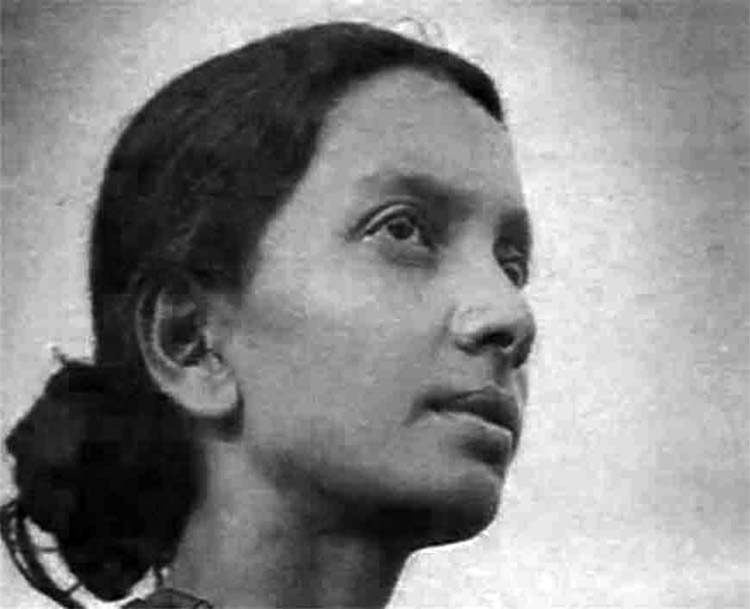
Kalpana Datta (27 July 1913 – 8 February 1995) was an Indian independence activist and writer from the Chittagong district of Bengal, in what is now Bangladesh. She is also written about as Kalpana Dutt, and after her 1943 marriage she was known as Kalpana Joshi.
She was studying science at Bethune College in Calcutta when, in May 1931, she joined the revolutionary group led by Surya Sen in Chittagong. She carried explosive material, prepared gun-cotton and took part in reconnaissance. She was arrested in May 1933, tried in a supplementary hearing of the Chittagong Armoury Raid case, and sentenced to transportation for life.
She was released in 1939, graduated from the University of Calcutta in 1940, joined the Communist Party of India, did relief work through the 1943 Bengal famine and the 1947 Partition, wrote a memoir of the Chittagong revolutionaries, and later worked for many years at the Indian Statistical Institute.
Understanding the Chittagong Armoury Raid
On the night of 18 April 1930, about sixty-five members of a group calling itself the Indian Republican Army, Chittagong Branch, acted together across the town of Chittagong. They were led by Surya Sen, a schoolteacher known as Masterda.
- 1They seized the police armoury and the Auxiliary Force armoury — but did not find the ammunition they needed.
- 2They cut telegraph and telephone lines, so the town could not call for help.
- 3They disrupted the railway, to slow the arrival of troops.
- 4On 22 April, British troops surrounded them in the Jalalabad hills. Twelve revolutionaries were killed.
- 5The survivors dispersed. Arrests, trials and executions continued for years afterwards.
Important for students
Kalpana Datta was not present at this raid. She was seventeen and studying in Calcutta. She joined the organisation in May 1931, about a year later. Many popular articles list her as a participant; the dates do not support it. Her name is linked to the case because she was tried under it in 1933.
Women in India's freedom movement
Women took part in India's independence struggle in many different ways: in mass civil disobedience, in strikes and boycotts, in social reform and education work, in political parties, and — in a smaller number of cases — in armed revolutionary organisations.
In Bengal in the early 1930s, a recognisable group of young women moved from student associations into armed political work. Three of them are connected to this story, and all three passed through the same Calcutta student network, the Chhatri Sangha.
-
1911 – 1932
Pritilata Waddedar
Led the armed attack on the Pahartali European Club on 24 September 1932. Took cyanide after being wounded, aged twenty-one.
-
1911 – 1986
Bina Das
Fired five shots at Stanley Jackson, Governor of Bengal, at the University of Calcutta convocation on 6 February 1932. Sentenced to nine years; released April 1939.
-
1913 – 1995
Kalpana Datta
Joined Surya Sen's group in May 1931. Arrested 19 May 1933, sentenced to transportation for life, released 1939, graduated 1940.
Noticing the pattern matters more than memorising the three names. These women were not isolated exceptions; they belonged to a network, and there were others whose names public memory has not kept.
Key historical terms
Twelve words and phrases that appear constantly in writing about this period.
- Armoury
- A store of weapons. The Chittagong raid targeted two: the police armoury and the Auxiliary Force armoury.
- Auxiliary Force
- A part-time volunteer military force in British India, drawn largely from the European community.
- Bengal Presidency
- A large administrative province of British India that included Chittagong and Calcutta. Divided in 1947.
- Chhatri Sangha
- “Women students' association”. A Calcutta organisation described in reference works as semi-revolutionary.
- Civil disobedience
- Organised, deliberate and openly declared refusal to obey particular laws. The method associated with the Indian National Congress under Gandhi.
- Gun-cotton
- An explosive material. Preparing it was among the tasks reference accounts assign to Kalpana Datta.
- Matriculation
- The school-leaving examination that opened the way to college. Kalpana Datta passed it in 1929.
- Partition of Bengal
- Two separate events: the administrative division of 1905, later reversed; and the division of 1947, which placed Chittagong in East Pakistan.
- Revolutionary nationalism
- The strand of the independence movement that held armed action against colonial authority to be justified and necessary.
- Supplementary trial
- A further hearing of an existing case, held for defendants who came into custody after the main trial had concluded. Kalpana Datta was tried in the second of these.
- Swadeshi
- “Of one's own country”. The movement, strongest after 1905, for boycotting British goods and using Indian-made ones.
- Transportation for life
- A sentence of indefinite forced removal from India to a penal settlement, most notoriously the Cellular Jail in the Andaman Islands.
Timeline of events
The short version. Every date here is cross-checked between reference sources.
- 1913Born 27 July at Sripur, Chittagong district.
- 1929Matriculates; goes to Bethune College, Calcutta, to study science.
- 193018 April: the Chittagong Armoury Raid. 22 April: the Jalalabad hills engagement. She is not a participant.
- 1931May: joins the Indian Republican Army, Chittagong Branch.
- 1932September: arrested in male attire during reconnaissance; released on bail; goes underground. 24 September: Pritilata Waddedar leads the Pahartali attack.
- 193319 May: arrested. Tried in a supplementary hearing and sentenced to transportation for life.
- 193412 January: Surya Sen and Tarakeswar Dastidar are executed.
- 1939Released after roughly six years in custody.
- 1940Graduates from the University of Calcutta; joins the Communist Party of India.
- 1943The Bengal famine; relief work; marries P. C. Joshi.
- 1945Chittagong Armoury Raiders: Reminiscences recorded as published in English.
- 1946Contests the Bengal Legislative Assembly election from Chittagong; not elected.
- 1947Partition; relief work; later moves to India.
- 1960sWorks at the Indian Statistical Institute; moves to Delhi.
- 1995Dies on 8 February, aged eighty-one.
Common questions
Kalpana Datta (27 July 1913 – 8 February 1995), also known as Kalpana Dutt and after her marriage as Kalpana Joshi, was an Indian independence activist from the Chittagong district of Bengal. She was a science student at Bethune College in Calcutta when she joined the revolutionary group led by Surya Sen in May 1931. She was arrested in 1933, sentenced to transportation for life in a supplementary Chittagong Armoury Raid trial, and released in 1939.
No. The raid took place on 18 April 1930, and available accounts record that Kalpana Datta joined Surya Sen's group in May 1931, roughly a year afterwards. She is closely associated with the Chittagong movement because she was later tried and sentenced in a supplementary trial of the armoury raid case, but she was not present at the raid itself.
Accounts record that Kalpana Datta was arrested in September 1932 while carrying out reconnaissance near the club dressed in male attire, about a week before the planned attack. Leadership of the operation passed to Pritilata Waddedar, who led it on the night of 23–24 September 1932 and took cyanide after being wounded.
She wrote a memoir of the Chittagong revolutionaries in Bengali, published in English translation as Chittagong Armoury Raiders: Reminiscences. The English edition is recorded as appearing in 1945, translated with the involvement of Arun Bose and Nikhil Chakraborty.
She was released in 1939. Several accounts connect her release to public campaigning on behalf of Chittagong prisoners, including appeals associated with Mahatma Gandhi and Rabindranath Tagore, though sources differ on how decisive any single intervention was.
Myth versus historical evidence
A practical exercise: four statements that circulate widely, and what the record supports in each case.
-
Often said She was one of the raiders on 18 April 1930.
Record The raid was April 1930; she joined the organisation in May 1931. Her connection is through a later trial.
-
Often said She was the only woman in the movement.
Record Pritilata Waddedar led an armed operation in 1932; Bina Das was sentenced the same year. All three moved through the Chhatri Sangha.
-
Often said Her story ends when she leaves prison.
Record She was released at twenty-six and lived another fifty-six years: a degree, party work, famine relief, an election, a memoir, and decades at a research institute.
-
Often said Gandhi's intervention secured her release.
Record The 1939 release year is well established. The causal role of any single intervention is repeated in popular accounts but not confirmed here against a primary source.
How to check a claim yourself
- Find the date attached to the claim, and the date of the thing it depends on. Most errors about Kalpana Datta are date errors.
- Ask who is speaking: a participant, a historian, a reference work, or a film.
- Check whether two independent sources agree, rather than two sources that both copied a third.
- If nothing supports it, say “not established”. That is a legitimate answer and a better one than a guess.
Questions for students
None of these has a single correct answer. They are written for discussion, an essay, or a project.
Comprehension
- What were the four targets of the Chittagong raid, and what was the purpose of each?
- Why did the raid fail on its own terms, despite the armouries being taken?
- What does “transportation for life” mean, and how is it different from imprisonment?
Analysis
- Kalpana Datta joined the movement after its defeat at Jalalabad. What does that suggest about her decision?
- Compare civil disobedience and armed revolutionary action as strategies against colonial rule. What did each assume about power?
- Why might a women's student association have become a route into armed political work?
Evaluation
- Is a participant's memoir more reliable than a historian's account? In what ways, and in what ways not?
- Why do you think the years after 1939 are so rarely told? Who decides which part of a life is the interesting part?
- What responsibilities does a filmmaker have when dramatising documented events involving real people?
Research
- Choose one date on this site and try to verify it in two independent sources. What did you find?
- Find a published article about Kalpana Datta and identify one claim it makes that this site does not. Can you establish it?
- Identify one woman from the Bengal revolutionary movement not named on this site, and write a sourced paragraph about her.
Go to the sources next. Everything here is a summary; the reading list is where the actual evidence lives.