i
Her own testimony
Chittagong Armoury Raiders: Reminiscences, written in Bengali and published in English in 1945. The strongest surviving link between her and any reader, because nobody stands between the two.
The memoirHow she is remembered
A life becomes a legacy through other people's decisions: what a historian reads, what a screenwriter compresses, what a syllabus keeps and what a caption gets wrong. This page is about those decisions, and about the distance they open between a person and their reputation.
01 — The routes by which she survives
i
Chittagong Armoury Raiders: Reminiscences, written in Bengali and published in English in 1945. The strongest surviving link between her and any reader, because nobody stands between the two.
The memoirii
Encyclopaedic entries, regional reference works such as Banglapedia, and historical studies of the Chittagong uprising. Terse, dated, checkable — and the reason this archive can state anything at all.
iii
The scholarly recovery of women's participation in anti-colonial politics, which reopened questions that mainstream narratives had closed. Much of what is now routinely said about Bengal's women revolutionaries exists because this work was done.
iv
Two Hindi feature films released within two years of each other put the Chittagong uprising in front of an audience no book could reach — and, inevitably, reshaped it on the way.
02 — On screen
Both dramatise the Chittagong uprising. Both include Kalpana Datta as a character. Neither is a source, and both are listed here as objects of study rather than as recommendations or as evidence.
2010
A mainstream production with major stars, which brought the Chittagong uprising to a national audience largely unfamiliar with it.
2012
Told largely through the eyes of Subodh Roy, a boy drawn into the uprising. It won the National Film Award for Best Debut Film of a Director at the 60th National Film Awards.
A feature film has obligations a history does not: a running time, a protagonist, a structure, an emotional arc, and an audience that must be able to follow it. Meeting those obligations requires compressing timelines, merging people, inventing dialogue and choosing a point of view. None of that is dishonest — it is what the form is — but it means that nothing seen on screen can be cited as evidence about what happened, and nothing absent from a film can be treated as evidence that it did not.
03 — Where the two versions part company
These are not criticisms of any particular film. They are the points at which popular retelling and documented chronology most often diverge, wherever the retelling comes from.
04 — Held open, not asserted
These appear in secondary or popular accounts of her life. They may well be true. They are listed here, unresolved, rather than either repeated as fact or quietly dropped — because a reader who encounters them elsewhere deserves to know where they stand.
A visit by Mahatma Gandhi to her in prison
Reported in popular accounts, sometimes naming Alipore jail. Not confirmed here against a primary or governmental source.
Appeals by Gandhi and Rabindranath Tagore securing her 1939 release
Widely repeated. The release year is well established; the causal role of any single intervention is not.
The title “Veer Mahila” conferred in 1979
Appears in some later accounts. This archive found no citation to an official record and does not list it among her documented honours.
The city in which she died
Sources differ: some give Kolkata, others New Delhi. The date, 8 February 1995, is consistent.
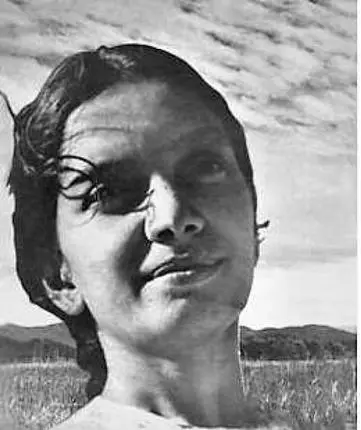
05 — How women revolutionaries are remembered
A woman who dies young is easy to commemorate, because her story has an ending and makes no further demands. Pritilata Waddedar is remembered more readily than either of her contemporaries who survived.
A woman who worked alongside a famous man is preserved as an attachment to him. Kalpana Datta is very often introduced as an associate of Surya Sen, which is true, and almost never as a graduate, an organiser or a writer, which is also true.
A woman can be flattened into a category — the woman revolutionary — and once she is a category she can stand in for all the others, which conveniently removes the need to learn any of their names.
This section is argument, not record. It is included because the way a story is shaped determines what a reader takes from it, and that shaping is worth making visible.
06 — What remembering actually asks of us
Go to the memoir before going to a summary of it — including this one. A participant's own account is a different order of evidence.
Check a date before repeating it. The single most common error about Kalpana Datta is fixed by comparing two years: 1930 and 1931.
Say what is not known. An honest gap is more useful to the next reader than a confident invention.
Keep the boring decades. The degree finished at twenty-seven and the years at a statistical institute are not filler between the interesting parts. They are most of the life.